
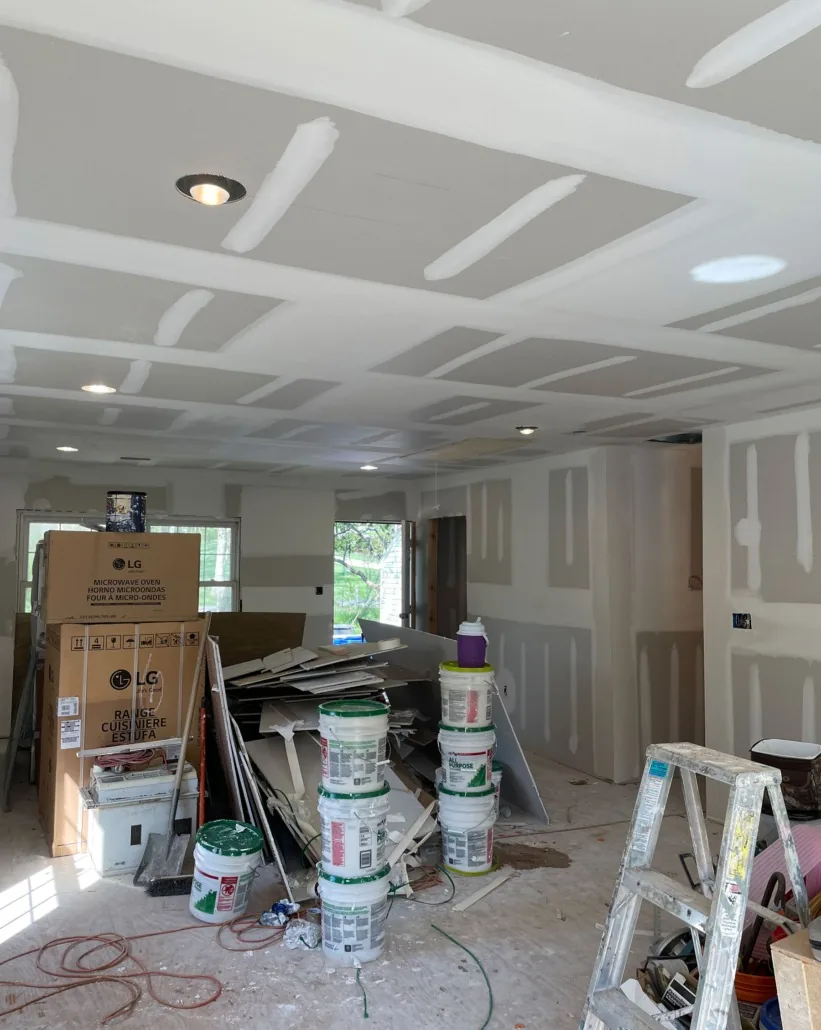
Understand how repairs, cleaning, sanding, caulking and primer influence the finished appearance of walls, trim and doors.
Paint follows the surface below it
Fresh paint can change color and sheen, but it does not remove dents, loose material, rough repairs or open joints. The condition below the coating remains part of the final result.
Repairs need time and the right sequence
Patching, drying, sanding and spot priming should happen before finish coats. Rushing these steps can leave visible edges or differences in absorption.
Clean surfaces support adhesion
Dust, grease and residue can prevent coatings from bonding evenly. Kitchens, bathrooms, trim and exterior surfaces may need different cleaning methods before painting.
Primer solves specific problems
Primer may be used for repairs, stains, porous surfaces or major color changes. It should be selected for the condition rather than treated as the same step on every project.
Use this guidance as a planning starting point.
Actual scope, methods and sequencing depend on the property, existing conditions and the approved project information. A site review may identify details that are not visible in photos or early conversations.